IMPROVING COMMUNITY LEVEL CAPACITY FOR PEACEBUILDING
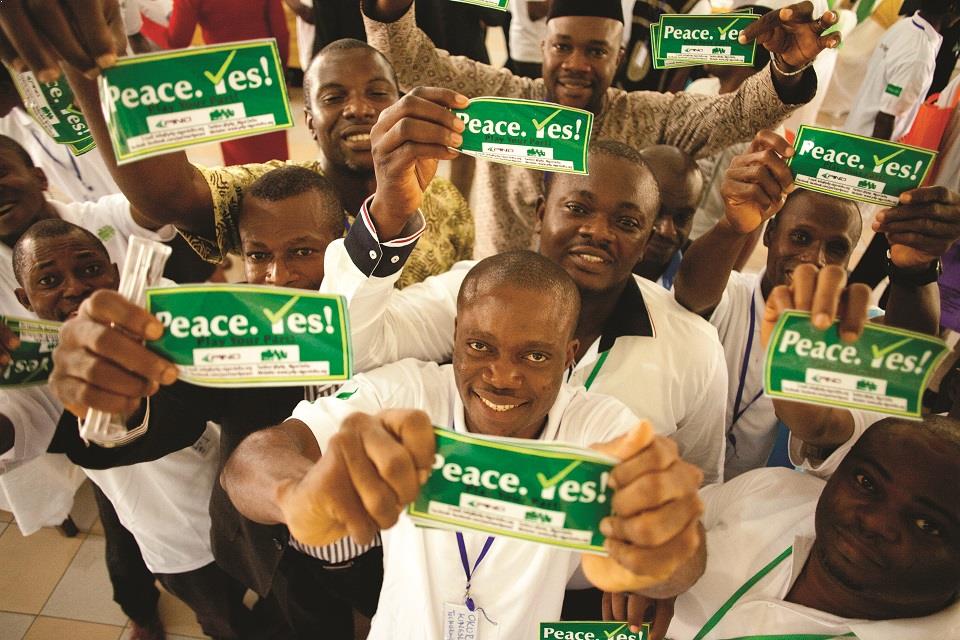
Partners for Peace members hold up their official stickers at the launch of the network in Port Harcourt, Rivers State
KEEPING A TENOUS PEACE DURING AND AFTER STATE ELECTIONS
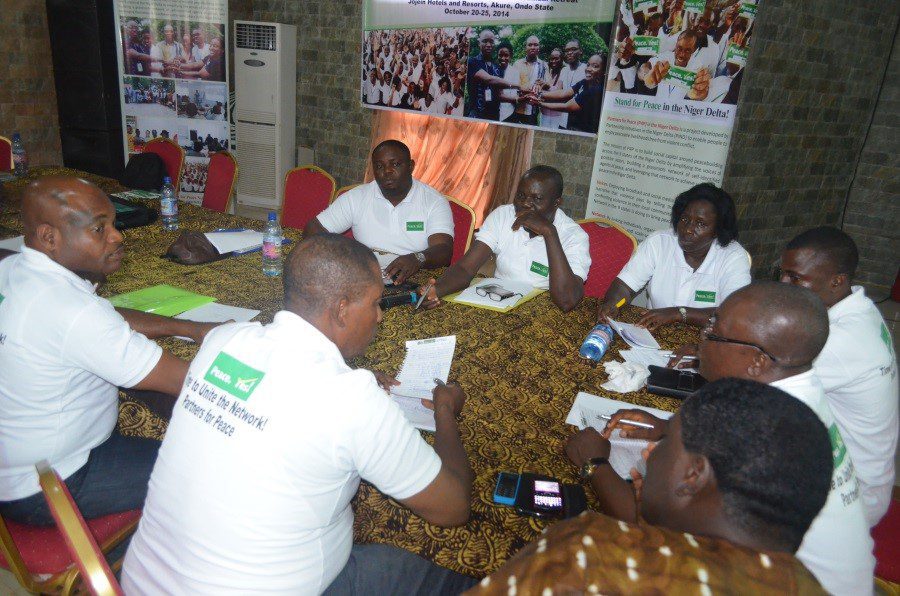
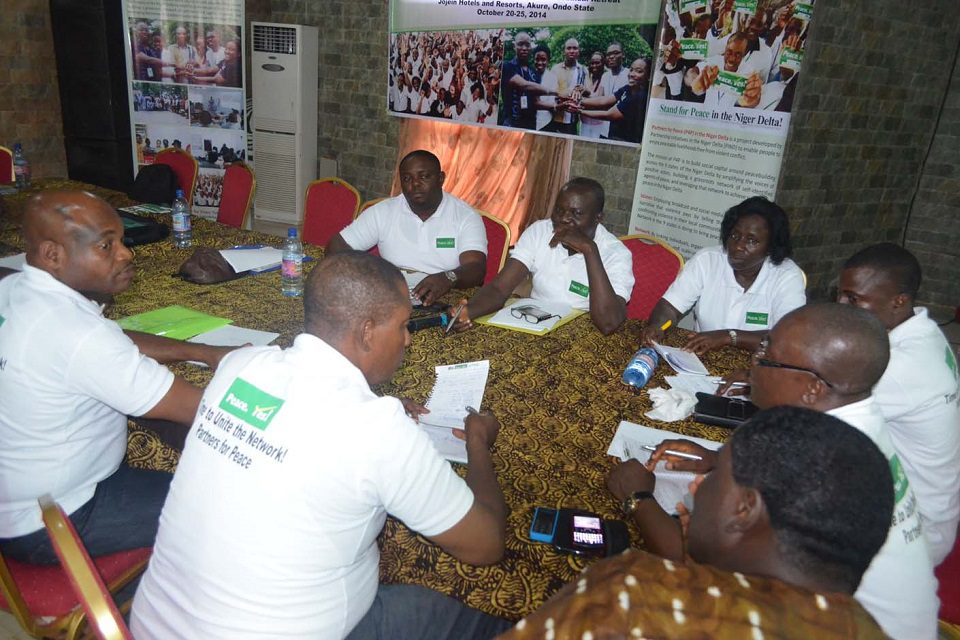
Partners for Peace members at a break-out session during a conflict sensitivity workshop
VOLUNTEERING FOR PEACE
P4P is made up of members from different age groups and walks of life united in their commitment to peace in their communities
For many decades, the Niger Delta has been embroiled in a cycle of conflict that has ravaged the region and has had severe effects on livelihoods. Driving these conflicts are myriad issues like competition over resources, crises in leadership, the absence of credible dispute resolution mechanisms, militancy, oil theft and environmental degradation. These issues have impacted negatively on economic growth and development; they have succeeded in devastating communities, destroying their various sources of livelihood, leaving inhabitants impoverished and vulnerable, and keeping the region in a cesspool of instability and violent conflict.
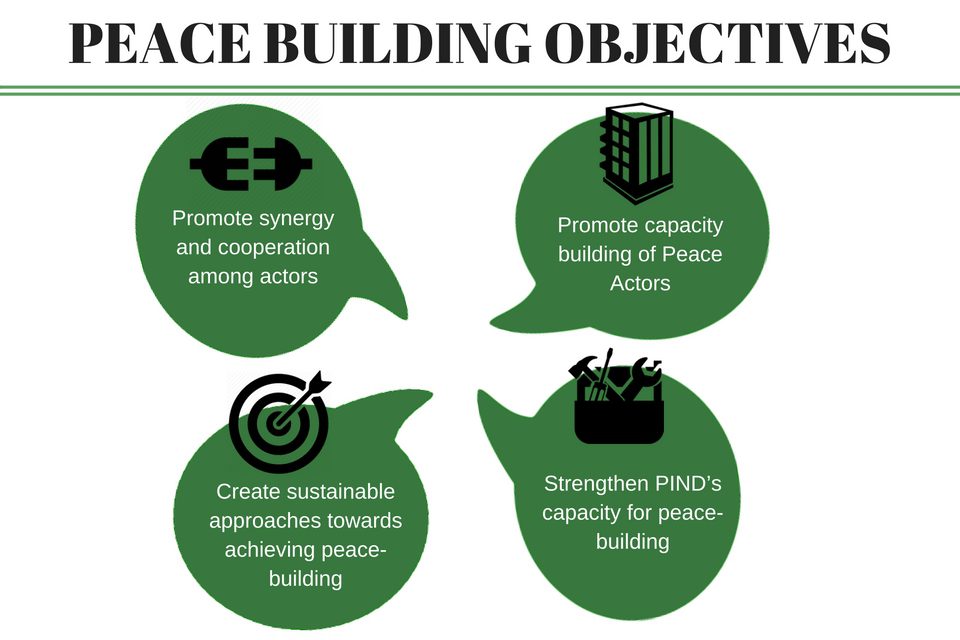
PIND’s peace-building program is aimed at achieving the greater goal of regional and lasting peace in the Niger Delta. Through this program, we are strengthening peace-building initiatives that enable sustainable economic development.
To achieve these objectives, PIND employs a number of strategies and activities to enable the Peace Building Program to provide support to our economic development program while also working on the drivers and root causes of conflicts in the region through innovative stakeholder partnerships and social marketing. These strategies include:
Building capacity of peace-building actors
Enabling economic development
Promoting synergy and cooperation among actors in the region
Strengthening PIND’s capacity for peace-building both in its projects and within the organization as a whole.
Promoting a more dynamic and holistic peace-building approach
Under the Peace-building Program, PIND implements projects that promote information sharing, collaboration, and synergy among peace-building actors in the region as a whole. These projects help monitor changes in knowledge, attitudes, and practices that demonstrate a communal or regional leaning towards more participatory and inclusive processes in local governance. They also encourage acceptance of peaceful approaches and deliberative dialogue processes instead of violent conflict, monitor improved awareness of the drivers and impacts of conflict on peaceable livelihoods and also measure the impact of projects on conflicts.
The Integrated Peace and Development Unit (IPDU)is PIND’s response to the rapidly changing conflict dynamics in the Niger Delta. The Unit promotes collaboration and synergy amongst community
stakeholders, local, regional, and national actors in both public and private sectors to address conflict early warning and response with particular focus on youths.
Our IPDU is made up of three components with interdependent functions:
A Research component that distributes all our studies on conflict in the region and helps plug all knowledge gaps on conflict in the Niger Delta in the donor community and government stakeholders.
A Capacity Building component that provides training based on identified needs
An Applied Learning component that implements projects with local and international stakeholders
The P4P Prevent Team works to address early stage conflicts throughout the Niger Delta before they worsen. The Prevent Team has addressed 107 incidents of early conflict between 2016 and June 2017
Improving Early Reporting on Conflict during Elections and Beyond
During the 2015 general elections, our IPDU established the Community Stakeholders Network (CSN), which was an early warning and early response system in 18 selected LGAs. The network was made up of trained volunteers, each of them private and public sector community leaders and security personnel based each of the selected LGAs. The team worked with Community Life Project (CLP) to develop a GSM-based online platform with the capacity to receive text messages and make voice calls from multiple phone lines. These trained volunteers sent conflict early warning messages to a dedicated SMS hub. The SMS also led to responses from appropriate security forces and INEC officials.
The CSN has now become the Prevent Team, a subset of the P4P which uses the SMS platform for its work in early warning on conflict and early conflict mitigation.
Supporting Local Peace Actors with Capacity and Networks
We helped establish the Partners for Peace (P4P) Network to serve as a network of private and public sector peacebuilders working in each of the nine Niger Delta States who work to respond to conflict in their communities. Each state chapter is independently-managed and organizes its own interventions, while we support the network members with technical support and capacity building trainings. In 2016, our Peacebuilding team supported 95 new and/or scaled-up interventions in peacebuilding and conflict resolution, resulting in a remarkable increase in conflicts being resolved by P4P Network members. Letting P4P grow on its own steam has been key to its growth; the Network has grown from 120 members at its start in 2013 to over 5,000 members from across all nine states of the Niger Delta region by June 2017, creating their own sub-chapters in some communities and even forming their own partnerships with relevant state actors as they deem fit. For more on P4P, visit their website p4p-nigerdelta.org
Providing Analytical Framework for Peace and Security Working Groups’ Deliberations
The NDPSWG is a state-level working group comprising of stakeholders working to mitigate conflict. The object of the NDPSWG is to analyze trend and patterns of conflicts and strategize on how to coordinate resources to address conflict issues. In the reporting period, the Peacebuilding team facilitated the Niger Delta Peace and Security working groups (NDPSWG) in Rivers, Bayelsa, Delta and Cross River States. The working groups had expanded to 3 other states since March 2017, and have enlarged its stakeholder groups to include representatives of security institutions and government agencies.
Peacebuilding Map
PIND is becoming known as a repository of data on conflict in the Niger Delta, and this is due in no small part to the P4P Peacebuilding Map. Populated with conflict information from PIND’s peace actors in all nine Niger Delta states, this interactive map compiles the shared knowledge of the wider peacebuilding community on the holistic patterns of conflict risk and the locations of peacebuilding actors working to address those risk factors. You can see the map here. Below is a short video on how the map works:
Through the Peace Building program, PIND has organized Peace and Security Working Groups made up of civil society and public sector stakeholders that meet every quarter in a Niger Delta state, in Abuja and in Washington DC to study conflict trends generated from the peace building map and proffer solutions to strengthen conflict mitigation efforts based on the information provided in the map.
Through P4P we seek to identify, establish, and strengthen grass-root conflict resolution initiatives within the Niger Delta region to promote a more enabling, integrated, and peaceable environment conducive for economic growth and development. Learn more
This unit responds to emerging threats, identifies and mobilizes the appropriate actors and resources via three interdependent components – research, capacity building, and applied learning. Learn more
Through this project, PIND boosts relations with communities surrounding the Economic Development Center (EDC) in Warri, Delta State, by promoting peace and helping identify opportunities that bring a functional means of livelihood. Learn more
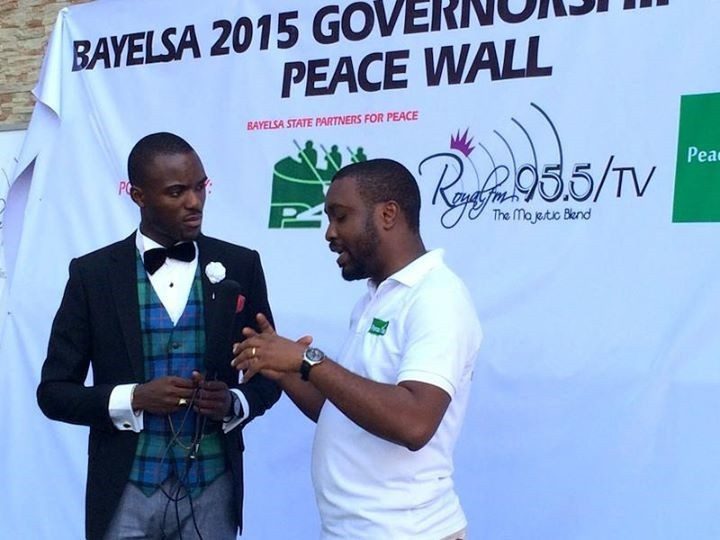
Our Peacebuilding Manager Nkasi Wodu prepares for a radio interview on peaceful elections ahead of Bayelsa gubernatorial polls in Yenagoa, Bayelsa State
173 of P4P’s data-driven reports reached 65,000 people between January 2016 and June 2017. By June 2017, P4P had reached over one million people with Peace Building messages through P4P media engagements, and 106 new stakeholders had used these messages to raise awareness on the importance of peace in their communities.
P4P Chapter members in a round-table discussion in Port Harcourt, Rivers State
MOBILIZATION AND EMPOWERMENT OF LOCAL PEACE ACTORS
Partners for Peace members hold up their official stickers at the launch of the network in Port Harcourt, Rivers State
Partners for Peace (P4P)
Our P4P project is a unique approach to peace-building designed to build social capital around peace-building in the Niger Delta by amplifying the voices of positive actors, building a network of self-identified agents of peace, and leveraging that network through facilitation, small grants, and capacity building. Learn more
Research, Training and Applied Learning for Peace
INTEGRATED PEACE AND DEVELOPMENT UNIT (IPDU)
PIND’s Peacebuilding program coordinator raises awareness on the need for peace ahead of Bayelsa State gubernatorial elections
Peace Messaging
This is the use of popular local radio and television shows by the various Partners for Peace (P4P) chapters to sensitise the population on the socio-economic benefit of peace in their communities, and engage in active social media outreach to young people in their communities on the importance of working towards peace. Learn more
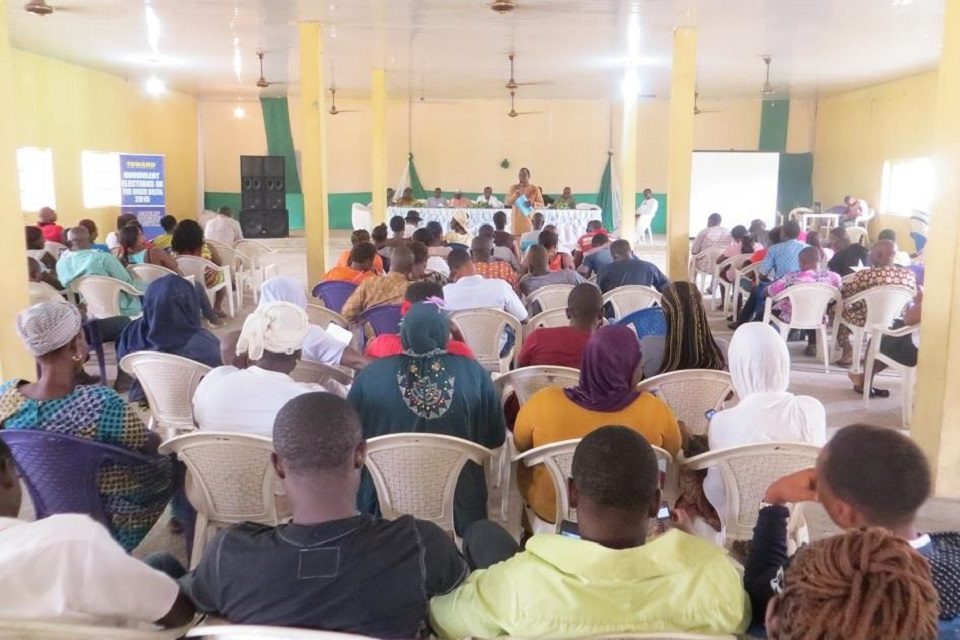
Townhall held by Community Stakeholder Network on non-violent 2015 general elections
Non-violent Election Project
PIND in partnership with Academic Associates PeaceWorks implemented a non-violent election project in three States in the Niger Delta aimed at sensitising the people to shun all forms of election violence and make the 2015 elections peaceful, free and fair. Learn more
Partners for Peace members at a break-out session during a conflict sensitivity workshop
Multi-stakeholders Platforms for Peace Building
These are partnerships that support and enable socio-economic development programs to improve the standard of living for communities in the Niger Delta and achieve a peaceful and enabling environment for equitable economic growth. Learn more
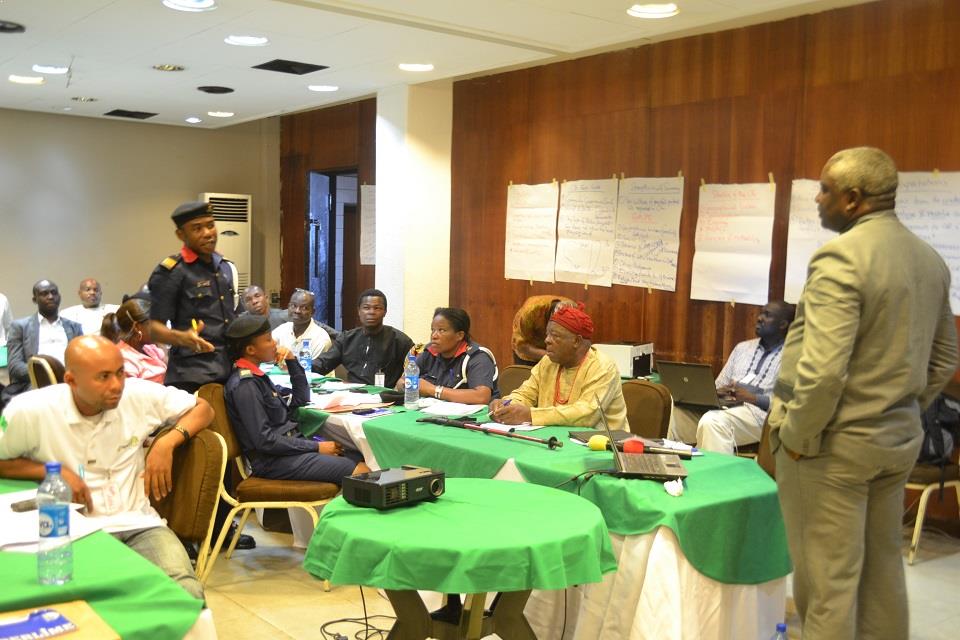
A civil defense officer and participant in the Conflict Assessment Tools (CAST) workshop raises a point about youth and cultism in Imo State
Conflict Sensitivity Mainstreaming
This program is designed to incorporate peace-building and conflict sensitivity into PIND’s programs and activities in order to reduce the potential for violent conflict which could become a disincentive for economic development. Learn more