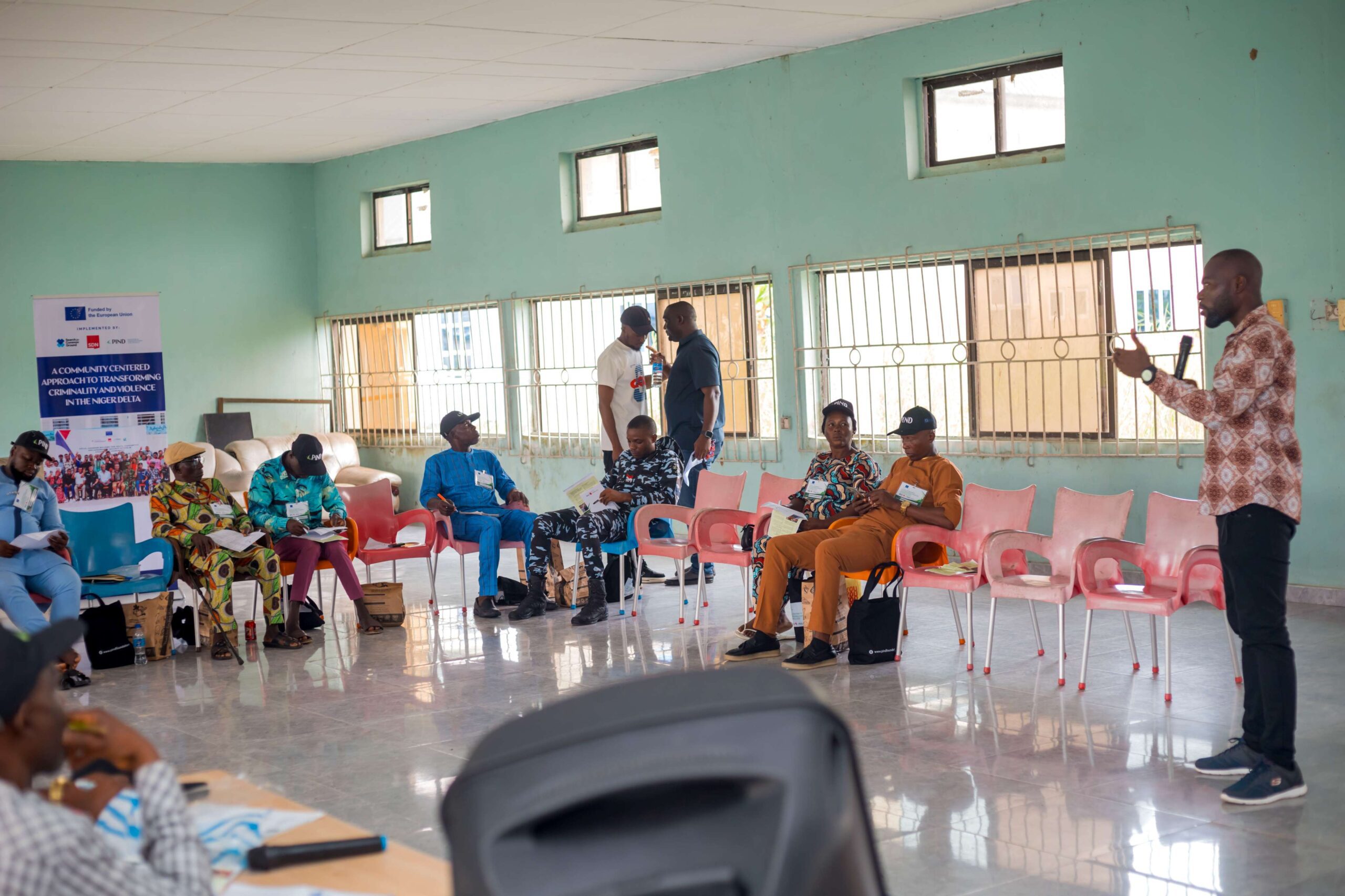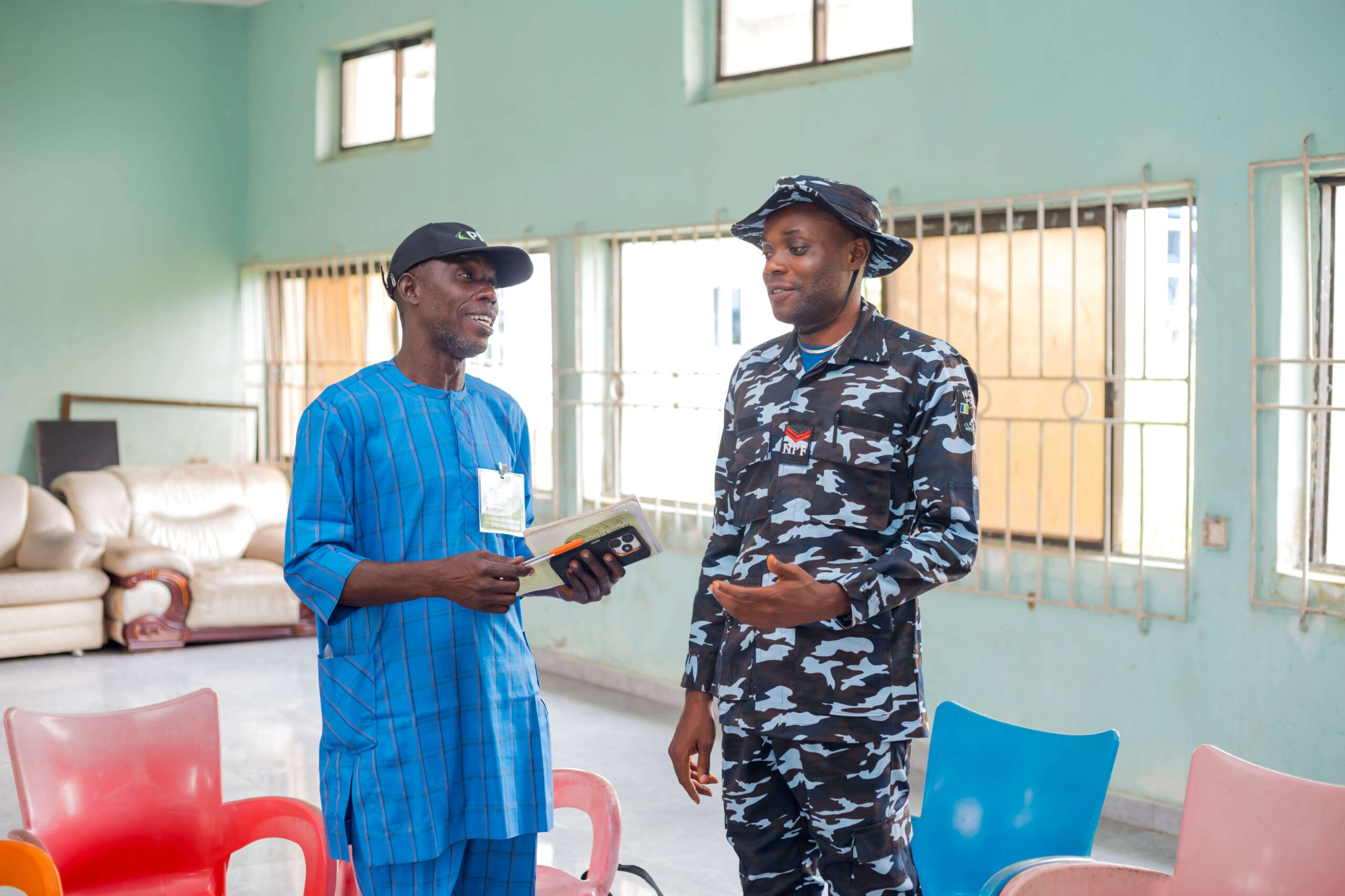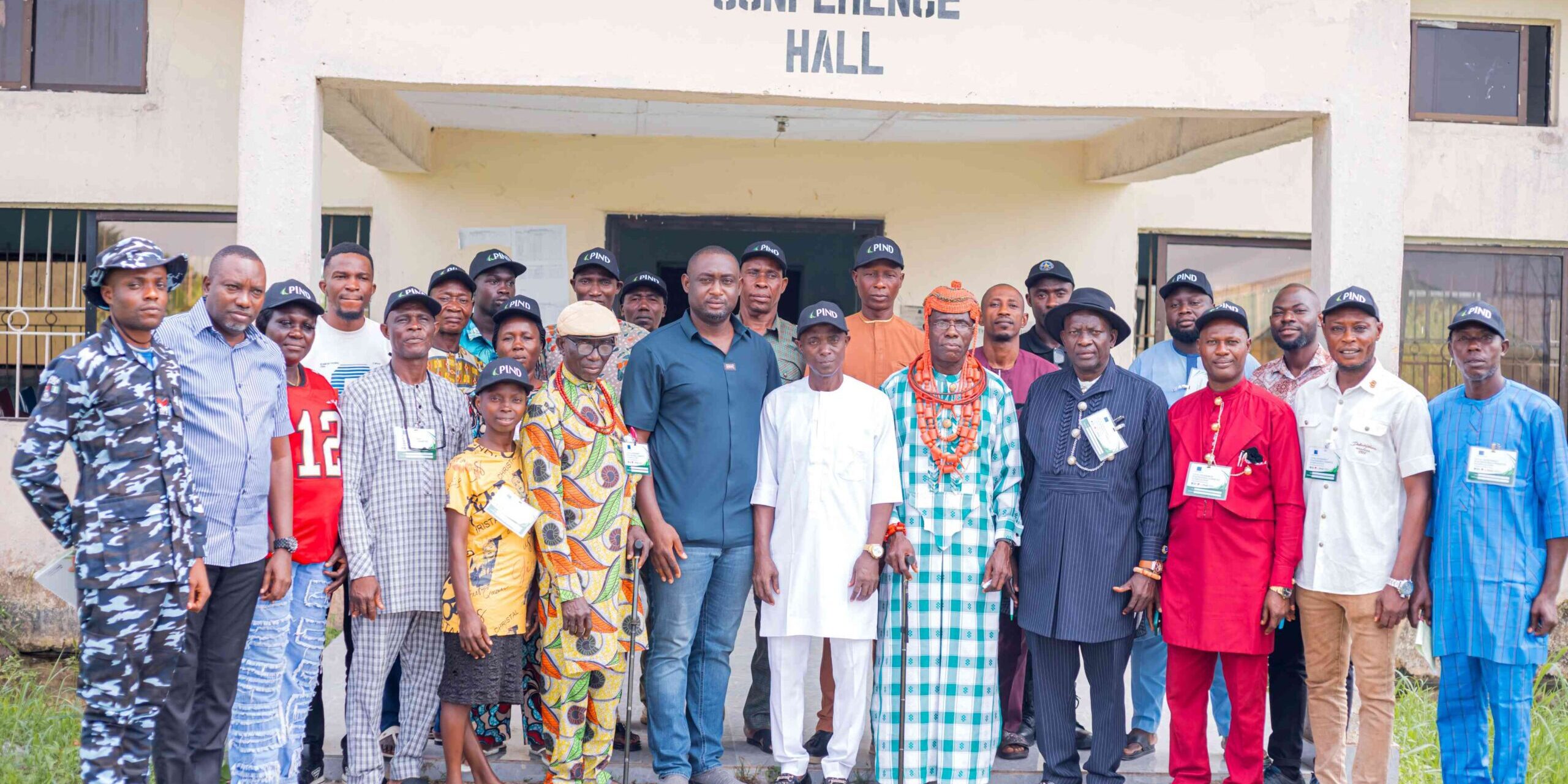
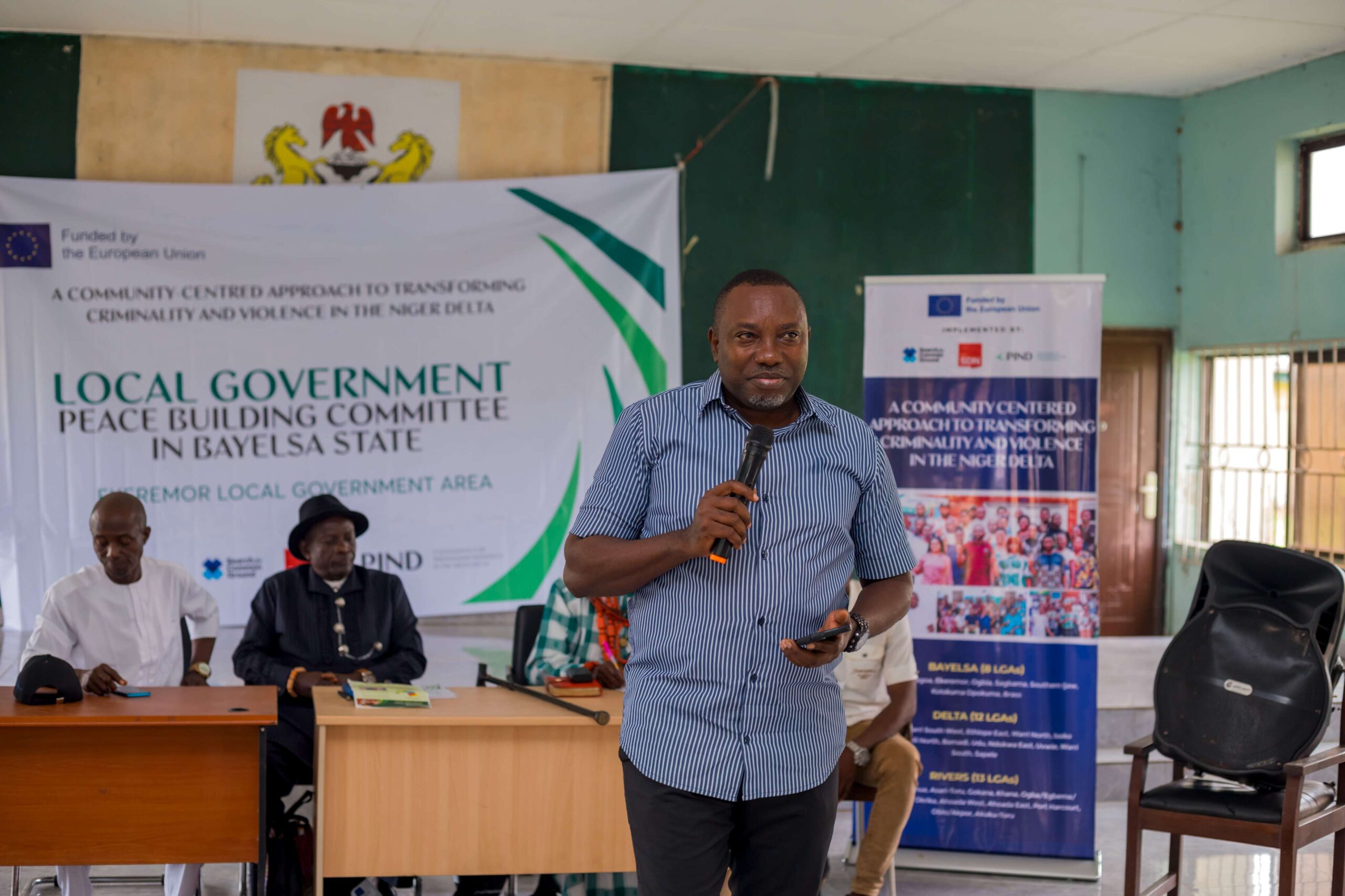
The Foundation for Partnership Initiatives in the Niger Delta (PIND) has inaugurated Local Government Peacebuilding Committees across the eight Local Government Areas (LGAs) of Bayelsa State to deepen grassroots conflict resolution, strengthen early warning systems, and improve collaboration between community stakeholders and local authorities.
The launch marks a major step forward in PIND’s commitment to institutionalizing community-led peace infrastructure across the Niger Delta. Implemented under the European Union-funded project, “A Community-Centered Approach to Transforming Criminality and Violence in the Niger Delta,” the initiative empowers local stakeholders and reflects a growing regional commitment to localized, inclusive, and multi-stakeholder solutions to insecurity and social unrest.
Building Locally Anchored Peace Infrastructure
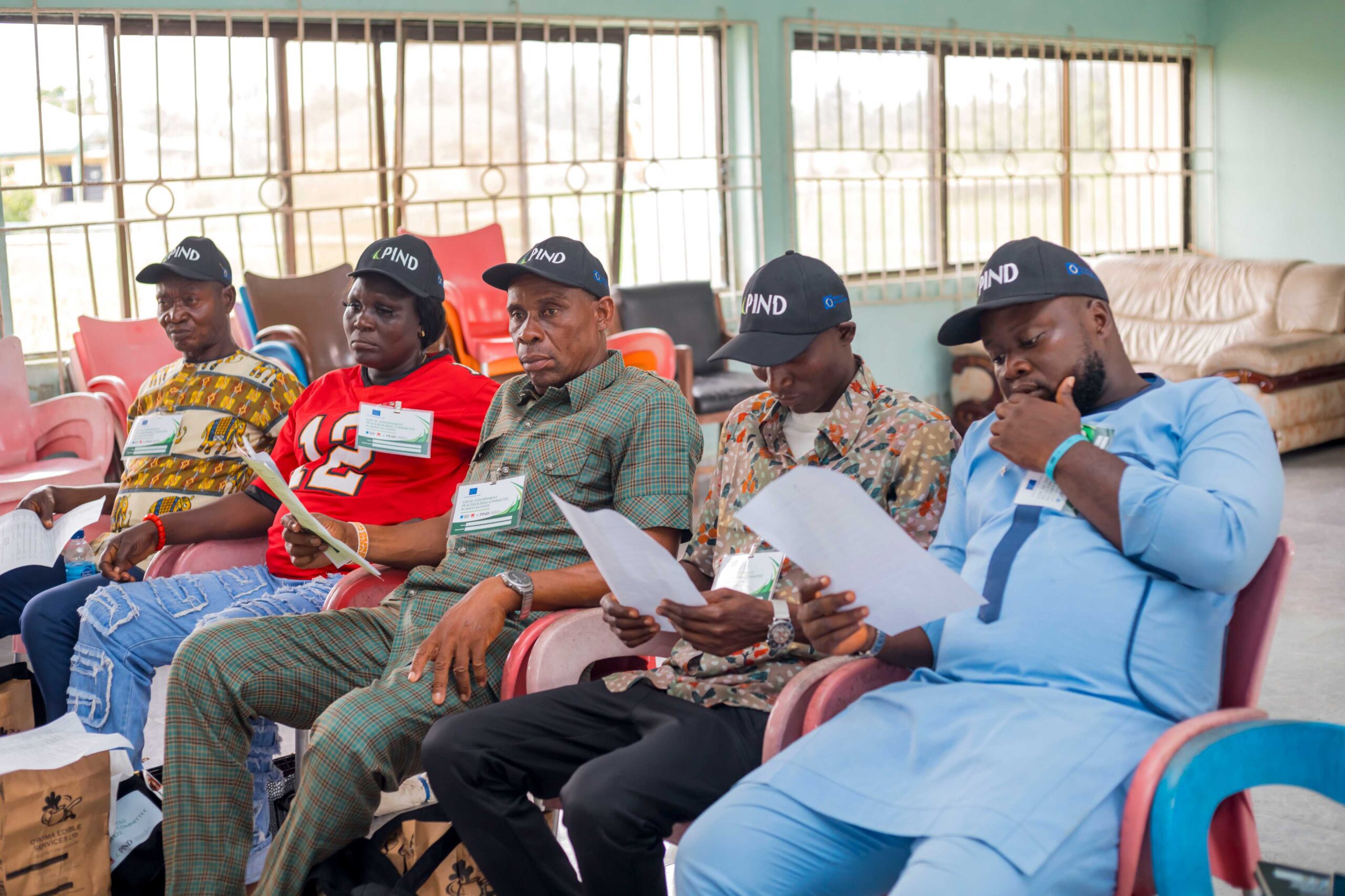
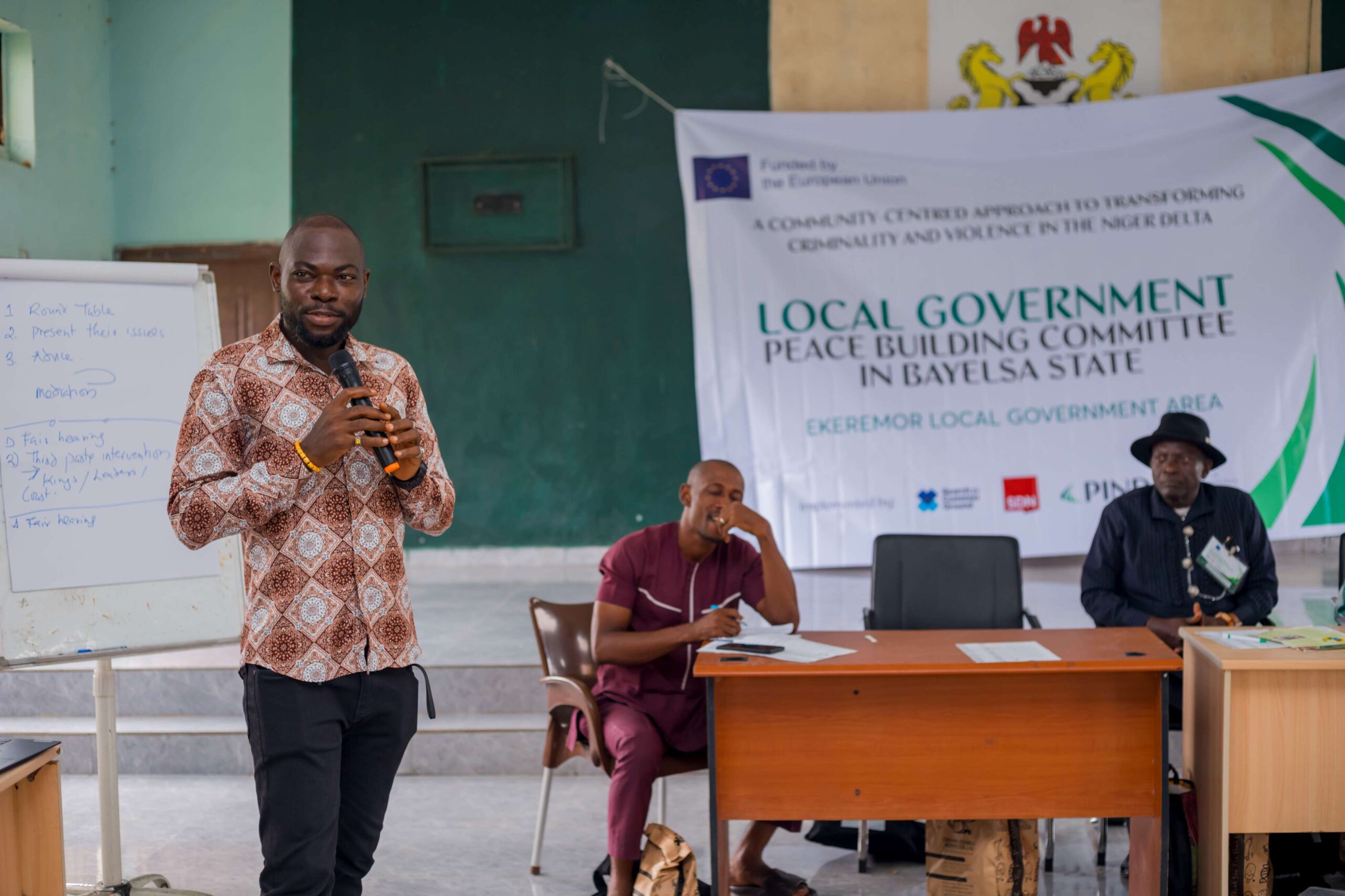
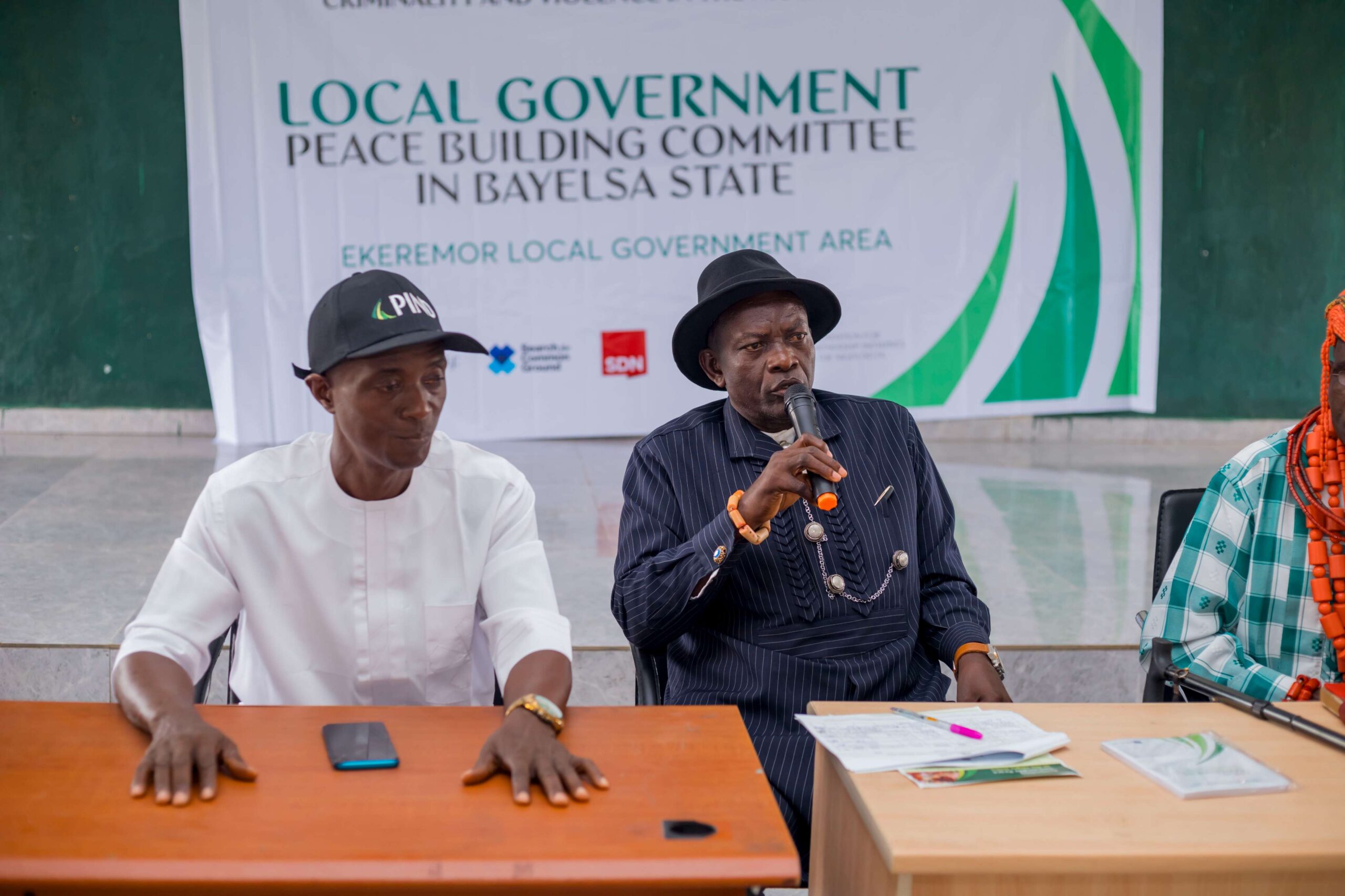
While supported by consortium partners Search for Common Ground (SFCG) and Stakeholder Democracy Network (SDN), the newly formed LGPCs build on the project’s Early Warning and Early Response structure, as well as bridging traditional conflict resolution practices with formal governance structures. These committees serve as neutral, inclusive platforms that bring together traditional rulers, LGA officials, youth and women leaders, civil society groups, private sector actors, and security stakeholders to jointly identify, analyze, and respond to local conflict drivers.
Speaking at the launch, Etukudoh Faith, Team Lead for PIND’s EU/SFCG Project, highlighted the importance of giving local communities a leading voice in peacebuilding: “By institutionalizing regular and structured dialogue, we are not only fostering collaboration but also empowering communities to influence local policies and shape more peaceful, inclusive societies.”
Inclusive Representation Across Bayelsa
The initiative spans all eight LGAs in Bayelsa: Southern Ijaw, Brass, Kolokuma/Opokuma, Sagbama, Nembe, Ogbia, Ekeremor, and Yenagoa. Each LGPC is made up of 25 carefully selected representatives drawn from key stakeholder groups, including:
- Traditional institutions and community elders
- Youth and women leaders,
- Persons living with disabilities
- Local government officials
- Security agencies (Police, DSS, NSCDC)
- Civil society organizations
- Private sector stakeholders
These committees will serve as structured hubs for collaboration – analyzing conflict trends, coordinating early responses, influencing local development agendas, and fostering trust between citizens and local authorities. They allow communities to move from reactive conflict response to proactive conflict prevention.
Strategic Outcomes and Early Milestones
This initiative strengthens PIND’s broader regional peacebuilding strategy by embedding conflict resolution structures directly within the communities most affected by instability. Early achievements from the rollout include
- Formation of eight operational peacebuilding committees across Bayelsa,
- Over 200 local actors mobilized and trained in peacebuilding tools,
- Launch of monthly meetings for conflict analysis, dialogue, and coordinated response
- Stronger linkages between traditional authorities, security actors, and government systems for rapid conflict mitigation
- Training and capacity-building on advocacy, leadership, conflict transformation, and resource mobilisation.
Looking Ahead: Sustaining Peace Through Local Ownership
The LGPCs are a foundational part of a multi-tiered peacebuilding ecosystem that PIND and consortium partners are working to scale across the Niger Delta. Over the coming months, each committee will:
- Convene regular peace forums
- Draft and present grassroots policy recommendations on insecurity, youth restiveness, and unemployment
- Coordinate interpretation and response to early warning alerts
- Engage in state-level policy dialogue and advocacy
Through continued technical support, training, and stakeholder engagement, PIND will support these committees to become durable, community-owned peace infrastructures that promote social inclusion, security, and long-term development.
“These structures aren’t just the committees meeting at an event; they are mechanisms for lasting stability – it’s the beginning of a new chapter where communities shape their own peaceful future,” added Etukudoh Faith. “Together, we are creating systems that are accountable, resilient, and truly reflective of the communities they serve.”