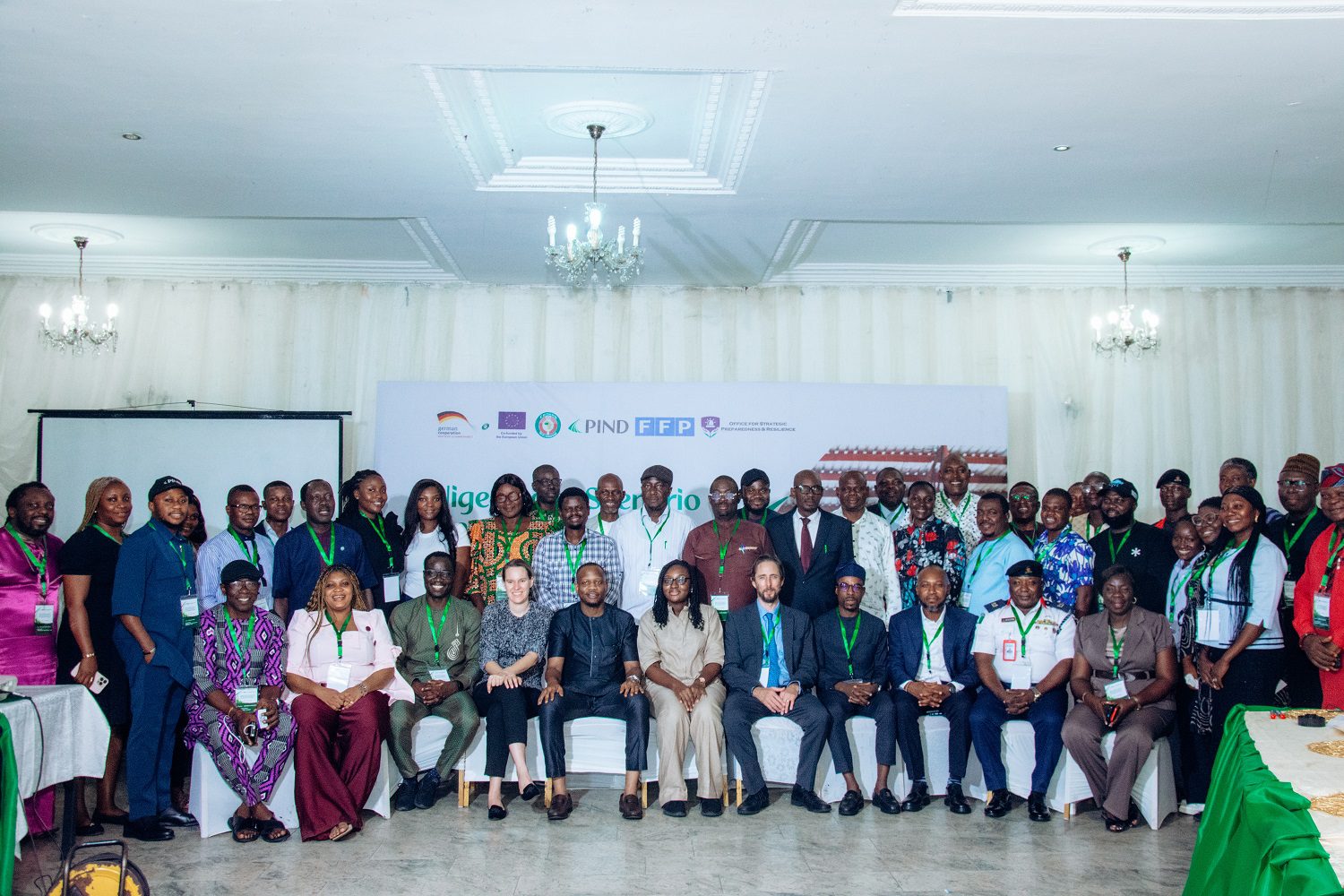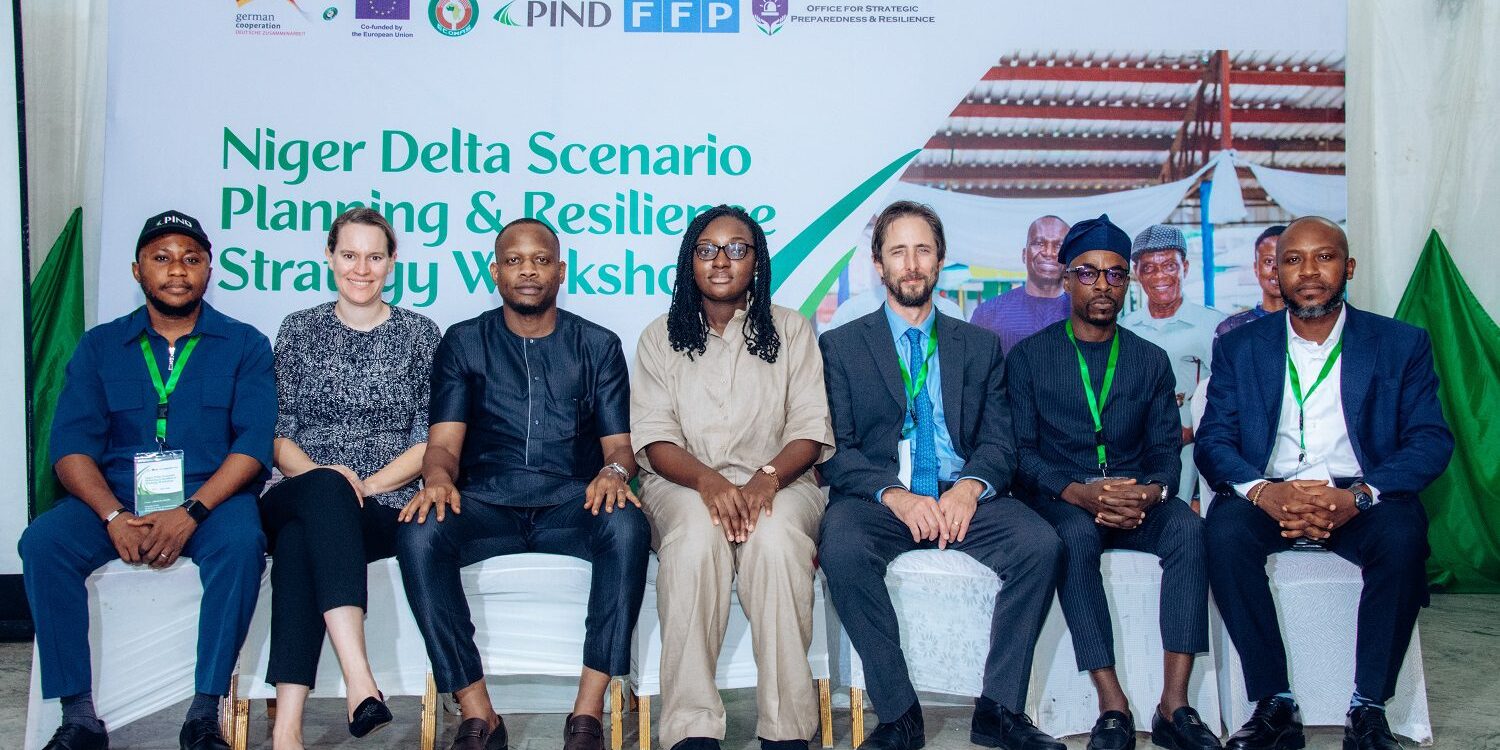
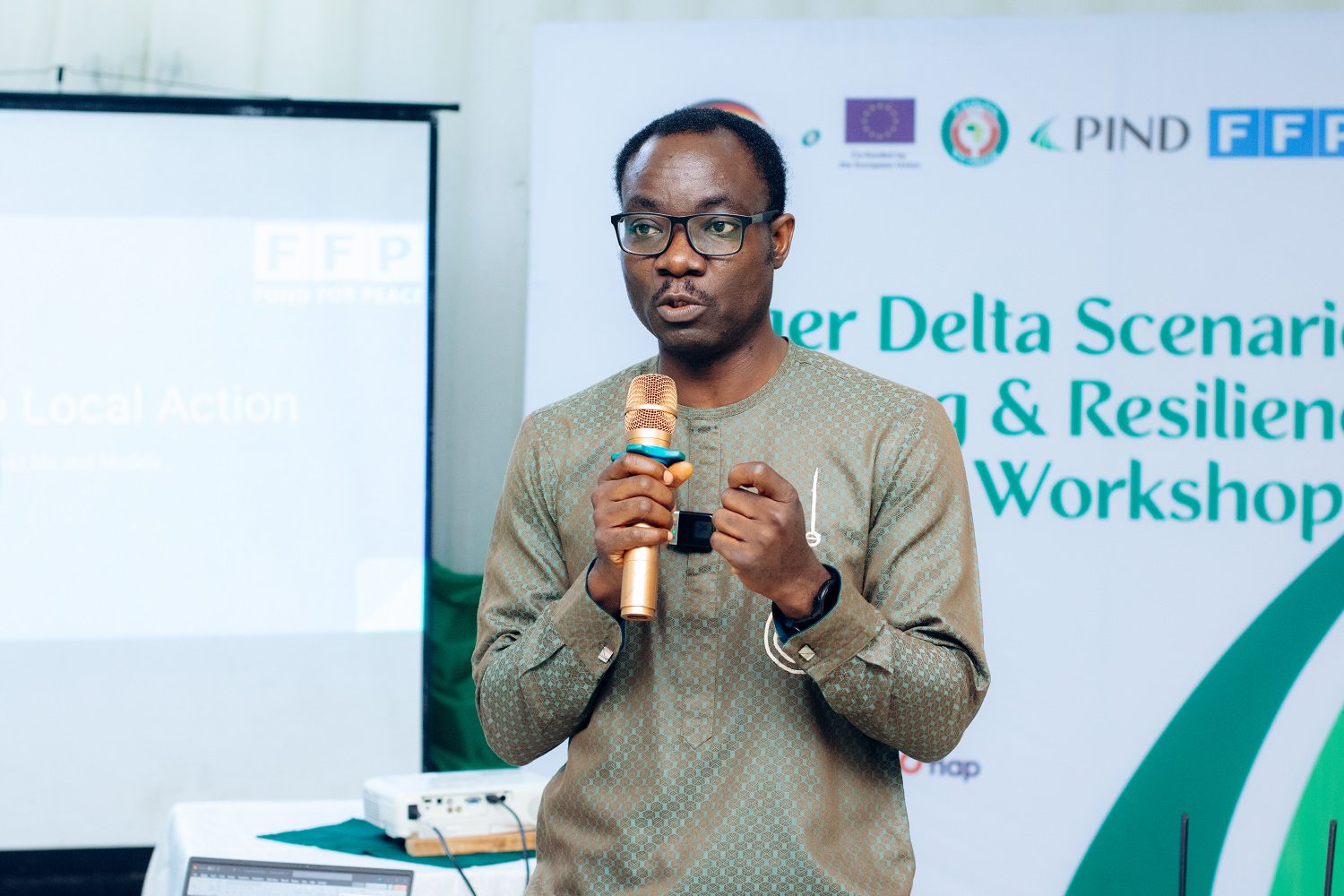
To strengthen regional preparedness and promote data-informed decision-making across the Niger Delta, the Foundation for Partnership Initiatives in the Niger Delta (PIND), in collaboration with the Deutsche Gesellschaft für Internationale Zusammenarbeit (GIZ) GmbH, the Office for Strategic Preparedness and Resilience (OSPRE), and The Fund for Peace (FFP), convened a three-day Niger Delta Scenario Planning Workshop on Resilience in Port Harcourt, Rivers State.
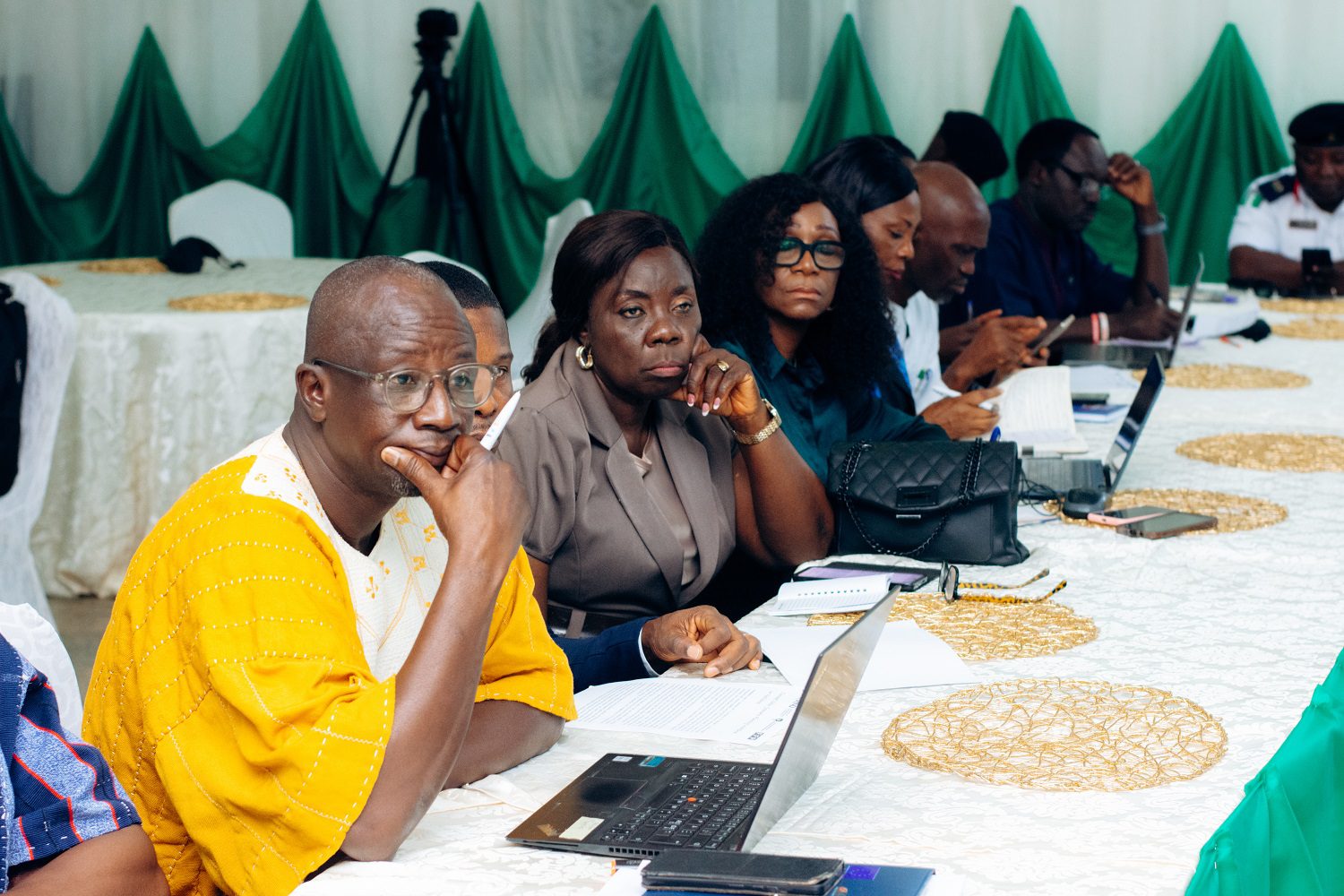
Supported by the ECOWAS Peace, Security and Governance (EPSG) Project, co-financed by the European Union (EU) and the German Federal Ministry for Economic Cooperation and Development (BMZ), the workshop brought together over 50 stakeholders from government, civil society, academia, private sector, and traditional institutions.
Strengthening Evidence for Regional Resilience Planning
The workshop, themed “From Risk to Resilience: Building a Future-Ready Niger Delta,” focused on improving the region’s capacity to anticipate, adapt to, and respond to climate shocks, insecurity, and governance risks.
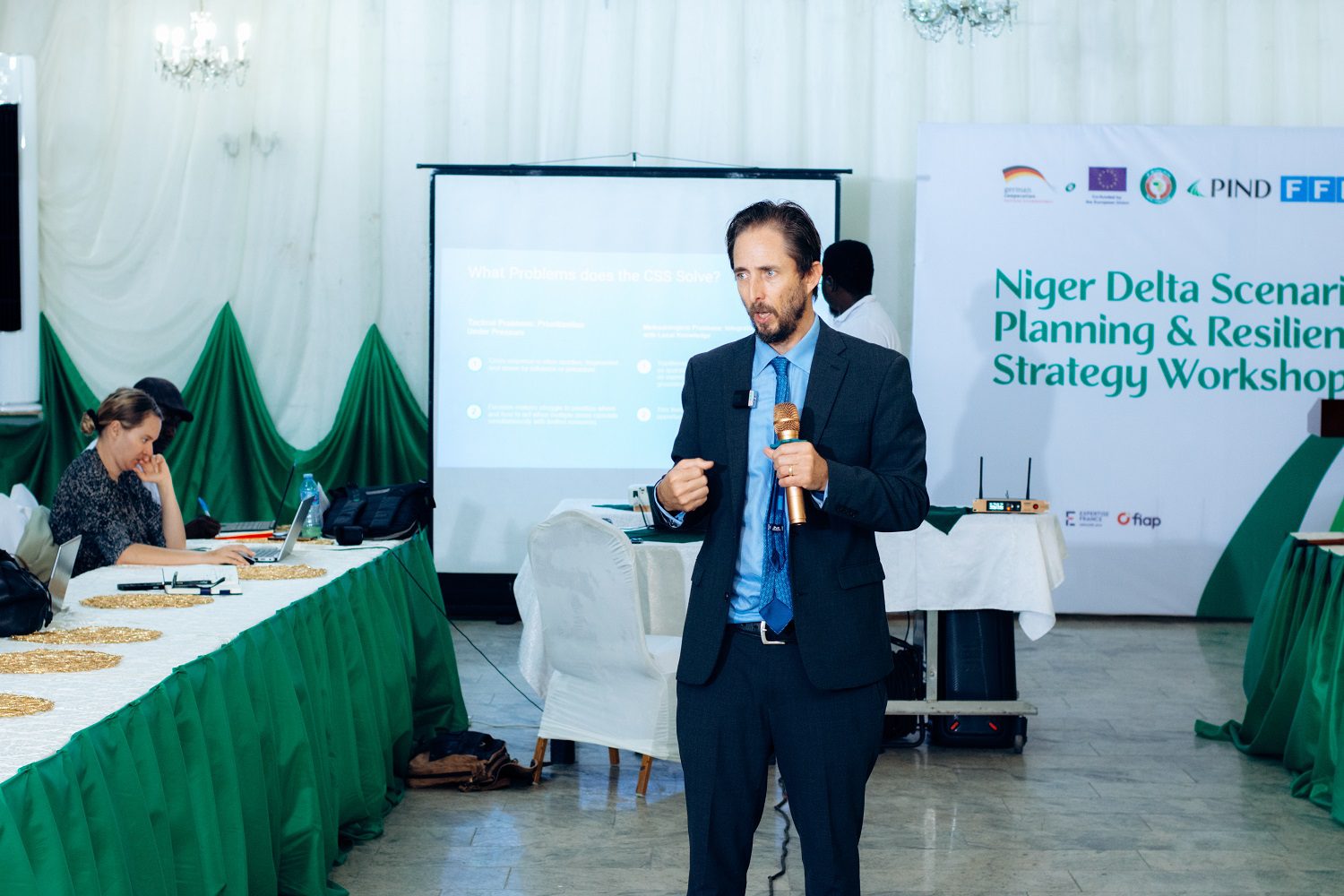
Participants applied advanced analytical tools such as the Fragile States Index (FSI), State Resilience Index (SRI), and Crisis Sensitivity Simulator (CSS), enhanced with AI-powered risk modeling developed by the Fund for Peace and SAS, to analyze systemic vulnerabilities and design practical response strategies tailored to the Niger Delta context.
Delivering the keynote address on behalf of PIND’s Executive Director, Mr. Sam Ogbemi Daibo, Advocacy Manager, Mr. Chuks Ofulue, highlighted the importance of the workshop while stressing the need for proactive planning. “The Niger Delta’s future depends on our ability to anticipate challenges rather than merely react to them. Through collaboration and data-driven foresight, we can transform uncertainty into opportunity and make resilience a shared responsibility.” Ofulue stated.
Key Outcomes of the Scenario Planning Workshop
The Port Harcourt session generated critical insights and concrete outputs that will guide future resilience planning efforts, including:
● Development of a Niger Delta Resilience Strategy, outlining coordinated crisis
preparedness and response mechanisms.
● A scenario planning report documenting methodologies, insights, and lessons adaptable
to other regions in Nigeria.
● Improved inter-agency coordination among emergency response and peacebuilding
stakeholders.
● Enhanced the ability of civil society and local actors to utilize data and foresight in
resilience planning.
● Integration of climate and peace data systems into local and regional planning
frameworks through PIND’s existing Partners for Peace (P4P) network and Early
Warning and Early Response (EWER) structures.

Building Partnerships for Anticipatory Governance
The initiative builds on more than 15 years of PIND’s peacebuilding and development efforts across the Niger Delta, including establishing the P4P Network and deploying its EWER system, which connects community-based peace actors to institutional frameworks for early warning and early response. This collaboration further strengthens the foundation by linking foresight analysis with practical governance tools, ensuring that communities, governments, and private sector partners work together to prevent crises before they occur.
Next Step
Following the workshop, PIND and partners will consolidate outputs into a comprehensive Niger Delta Resilience Strategy and Action Plan. The findings will also inform future regional and national resilience frameworks under the ECOWAS Peace, Security and Governance (EPSG) Project.
By linking data, foresight, and collaboration, PIND and its partners are setting a new benchmark for anticipatory governance, transforming how the Niger Delta prepares for, adapts to, and thrives in the face of emerging risks.
Through these efforts, PIND reaffirms its commitment to strengthening peace, stability, and sustainable development across the Niger Delta region.